
Harm Reduction : is it an incentive to drug use?
This is a question that we hear often in festivals and events in which we participate. Sometimes people also tell us that we trivialize drug use or that we make it seem as if it’s no big deal. These are pretty frequent worries, so we came up with this article to clarify the goals of our approach. We’ll be addressing harm reduction’s history, definition and guiding principles.
History and definition
This approach aims to reduce risks associated with a given behaviour, or the possible harm typically associated with it. For us at GRIP, those behaviours are mainly drug use and sexuality, but the same principle can be applied to hearing health by giving out earplugs and to driving by introducing speed limits and seat belt regulations.
The question we need to ask ourselves is:
Is it realistic to think that we’ll be able to eradicate this behaviour? If not, how can we reduce the risks associated with it, instead of trying to suppress the behaviour itself?
The prohibition approach tried to handle behaviours it deemed problematic by discouraging them completely, most notably with the War on Drugs. However, major public health challenges such as the HIV epidemic or the opioid crisis have shown that when repression’s the norm, people still end up using drugs on the sly. This ends up exacerbating the very risks we aim to reduce. For us at GRIP, access to neutral and evidence-based information is central to harm reduction. This sets up people for autonomous and informed decision making.
Main Principles
Pragmatism
Instead of asking ourselves what is optimal, we aim for what is realistic for the person we’re helping. We want to weigh the pros and cons of each option that they have so we can help them maximize their well-being. This leads us to tolerate a certain behaviour instead of reducing it at all costs.
With cannabis, this could include smoking after work rather than before, choosing a less harmful way of using than smoking (ingesting or vaporizing) or going for a lower THC content.
Humanism
Instead of presenting the individual with a single option to improve their situation, we choose to present them with a range of options. This way, they can choose what suits them best. We want to empower the person by acknowledging and respecting where they position themselves regarding their relationship with substance use.
To continue with the cannabis example, we’ll present the individual with a multitude of choices, while empowering and involving them in the decision making, instead of imposing the solution we see fit, like stopping smoking if the person has been a regular smoker for years.
Low threshold/accessibility
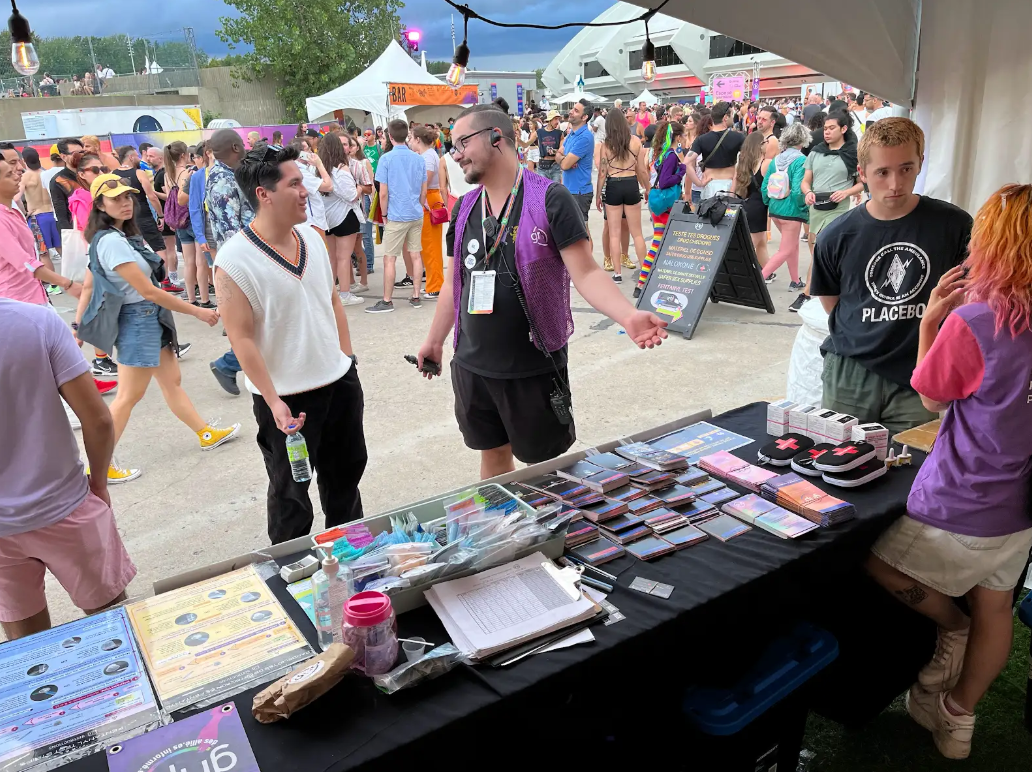
We want to adapt our services to our users and their environment to make them as approachable and accessible as possible. This involves having a visible stand in a party environment, or not asking for a RAMQ card to use our analysis service.
Consequences
We promote concrete actions to reduce harm associated with a behaviour. For example, we may hand out naloxone and explain how it works to prevent fatal opioid overdoses. We could also hand out sniff kits or condoms to reduce infection risks.
Programs and policy
The previously mentioned actions must be backed by effective and coherent policy making. Decriminalization of drug possession, legal exemptions for drug checking and safer drug gear disposal initiatives are all facilitating factors.
In Conclusion
Considering these principles, what puts harm reduction ahead is the message it sends to our users : we’re not here to judge them, but to respect their choice. They end up feeling accepted and understood.
We also don’t position ourselves as experts, but as helpers/caregivers. We support the person in their process and we recognize the pleasure they might reap from their use, which ultimately helps us build a trusting relationship.
You can now consult our Law of Effect website to know aboutconcrete harm reduction strategies YOU can put into practice to reduce the risks with YOUR substance use.
Click here for personalized harm reduction strategies!
Stay informed



GRIP in action
GRIP in action
Want to know more about our mission and our different services? Visit our website or contact us

baladope
baladope
Mixing pleasures, reducing risks, alcohol behind the scenes.